

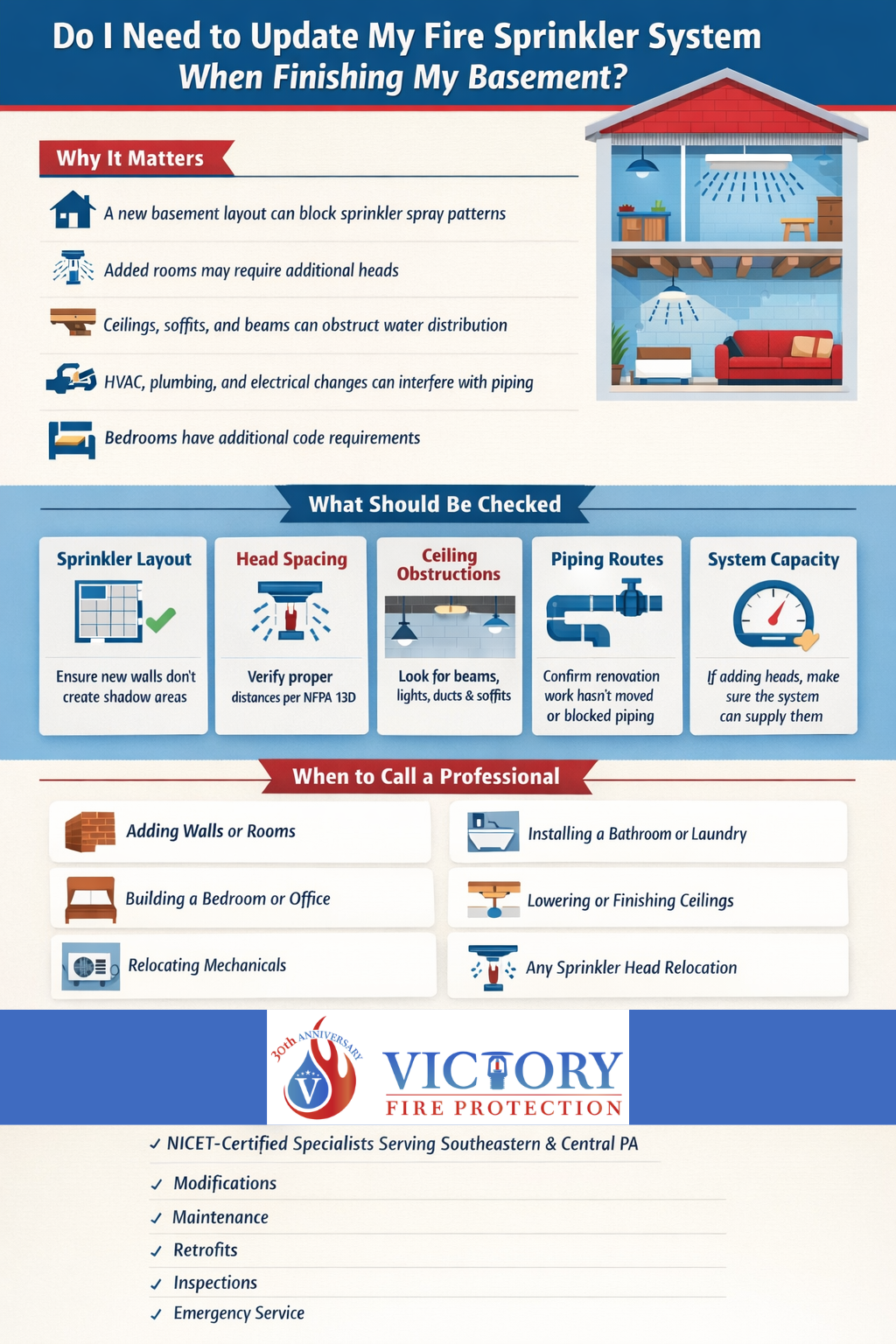
Finishing your basement is an exciting upgrade, but it can also affect how well your fire sprinkler system protects your home. Many townships require sprinkler additions or modifications during renovation projects to ensure the system meets current building codes. Before installing new walls, ceilings, or divided rooms, it’s important to confirm that your sprinklers still deliver full, code-compliant coverage for your redesigned space.
Planning a basement renovation? Contact Victory Fire Protection for a free residential fire sprinkler audit to ensure your home stays protected and compliant.
How Basement Renovations Can Impact Your Fire Sprinkler System
Basements are one of the most commonly renovated areas of a home and one of the areas where fire sprinkler coverage is most likely to be affected. According to the NFPA’s U.S. Experience with Sprinklers research, when sprinklers were present in reported structure fires, the fire was confined to the object or room of origin 94% of the time, compared to 70% in properties without sprinklers, and the civilian fire death rate per fire was up to 90% lower when sprinklers were present. Because those systems are engineered to match the original layout of your home, even small changes during a renovation can undermine their effectiveness.
1. New Walls Can Block or Interrupt Sprinkler Coverage
Sprinklers rely on unobstructed water distribution. When you build new interior walls, closets, or partitioned rooms, you may inadvertently create:
- Shadowed or unreachable areas
- Blocked spray patterns
- Smaller rooms that require their own sprinkler heads
NFPA 13D emphasizes that each sprinkler head must be positioned to avoid obstructions and ensure reliable water delivery.
2. Bathrooms, Laundry Rooms, and Utility Spaces May Require Additional Heads
If your new basement layout includes bathrooms or utility rooms, these enclosed areas may now require dedicated sprinkler heads to meet recommended residential protection standards. Shower walls, mechanical closets, and laundry alcoves can all affect distribution patterns.
3. Finished Ceilings Can Interfere With Existing Sprinkler Types and Placement
Drywall, drop ceilings, beams, soffits, new lighting and fan fixtures can all affect sprinkler head placement and spray patterns, which may require layout changes, including:
- Concealed heads for a flush install
- Pipe removal, addition, or relocation
- Sidewall sprinklers for tight spaces
- Semi-recessed pendent heads in unfinished spaces
- Additional sprinkler heads
Finished basements often need a mix of system changes and head types to maintain proper coverage.
4. New Plumbing, Electrical, or HVAC Work Can Affect Piping
Mechanical work during a renovation may shift piping or interfere with the sprinkler system insulation protection. Even a slight adjustment in a pipe’s location can alter sprinkler head orientation, hinder the ability for the piping to drain correctly, or push insulation away from protected areas — which is especially crucial in colder zones where freeze protection matters.
5. Basement Bedrooms Trigger Special Life-Safety Rules
Basement bedrooms often require:
- Sprinklers positioned for optimal early suppression
- Proper spacing per NFPA 13D
- Clear coverage without obstructions
Bedrooms are one of the most common areas where homeowners unknowingly fall out of compliance after renovating.
Navigating Building Permits and Township Requirements
One of the biggest hurdles in a basement renovation is the building permit process. Even if your home was built decades ago—for example, in 1980 when sprinkler requirements were different or non-existent—modern codes apply the moment you begin a significant modification. Many townships will not issue a final building permit for a finished basement, kitchen renovation, or home addition unless the fire sprinkler system is updated or installed to meet current safety standards. Stepping into a renovation without accounting for these “step-in” requirements from the township can lead to costly delays or failed inspections.
Why Fire Sprinklers Matter in Finished Basements
Basement fires spread quickly due to utility equipment, storage, and concealed construction spaces. Residential sprinkler systems are one of the most effective life-safety additions a home can have, dramatically reducing flashover and limiting smoke spread. When properly updated after a renovation, they provide:
- Early suppression
- Longer escape time
- Reduced structural damage
- Lower risk of injury
- Greater overall peace of mind
What’s Included in a Fire Sprinkler Renovation Audit
Victory Fire Protection provides homeowners a thorough renovation-focused review that includes:
✔ Coverage Evaluation
Ensures all areas of the new layout receive proper spray coverage.
✔ Head Spacing & Placement Review
Verifies spacing meets NFPA 13D obstruction and distance requirements.
✔ Ceiling Obstruction Assessment
Identifies issues caused by soffits, beams, fixtures, ductwork, and lighting.
✔ Pipe Routing & System Integrity Check
Confirms no piping has been shifted, or compromised during the remodel.
✔ Hydraulic Review (If New Heads Are Added)
Ensures your system maintains proper water flow and pressure after modifications.
✔ Clear Recommendations
If adjustments are needed, we outline transparent, cost-efficient solutions.
Protect Your Home with Victory Fire Protection
For over 30 years, Victory Fire Protection has helped homeowners across Southeastern and Central Pennsylvania (including Montgomery, Chester, Berks, Delaware, Bucks, Lancaster, Lehigh, and Northampton Counties) keep their homes safe with expert fire sprinkler services.
Our NICET-certified designers and highly trained technicians provide renovations, sprinkler head relocations, retrofitting, system maintenance and inspections, antifreeze and backflow testing, pump and tank support, and 24/7 emergency service.
Ready to finish your basement safely and keep your family protected?