
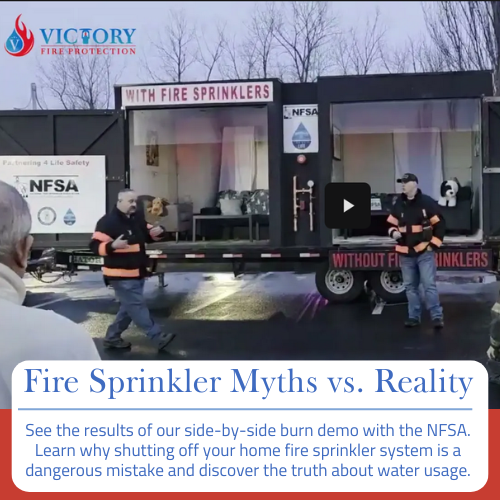
Victory Fire Protection recently joined forces with Dave Kurasz and the National Fire Sprinkler Association (NFSA) and Reliable Automatic Sprinkler for a powerful live burn demonstration in Exton, Pennsylvania. The event brought together local residents, fire departments, and business owners to witness a side-by-side comparison of how fire behaves in a sprinklered home versus one without protection.
For many in attendance, the demo was an eye-opener. It didn’t just show the speed of fire; it dismantled several common myths that lead homeowners to make dangerous decisions regarding their safety systems.
Debunking the Fire Sprinkler Myths That Put Families at Risk
Many homeowners consider decommissioning their systems based on misinformation. Seeing a live burn proves that these myths are wrong & can be life-threatening.
Myth 1: The “Ghost Water” Myth and Rising Utility Bills
The most common reason customers shut off their systems is the belief that the pipes are constantly drawing water, leading to a massive increase in water bills.
The Truth: This is 1000% false. Once your system is installed and filled, it reaches capacity and stops.
- An average-sized single-family home holds only about 20–30 gallons of water.
- No more water enters or leaves the system unless there is a fire or a professional performs maintenance.
- A standard inspection usually wastes less than one gallon of water.
If you are concerned about your system’s current water usage or pressure, our team provides expert homeowner fire sprinkler services to ensure your system is efficient and leak-free.
Myth 2: The Fear of Frozen or Burst Pipes
Residents often worry that having water-filled pipes in the walls will lead to flooding during Pennsylvania winters. This fear often leads people to drain their systems, leaving them completely vulnerable to fire.
The Truth: When properly installed and maintained, these systems are integrated into the home’s “heated envelope” or protected with environmentally safe antifreeze solutions. Shutting the system off doesn’t just “prevent” a leak; it guarantees that you have zero protection if a space heater or electrical fault starts a fire.
For a deeper dive into protecting your system during the colder months, check out our Essential Guide to Winterizing Your Fire Sprinkler System. This guide is a must-read for Southeast PA residents looking to prevent burst pipes and massive water damage while maintaining 24/7 fire protection.
Myth 3: Smoke, Cigarettes, or Burnt Toast Will Trigger the System
A common fear for homeowners is that a burnt dinner or a smoker in the house will cause the sprinklers to activate and soak the room.
The Truth: Fire sprinklers are heat-activated, not smoke-activated. Each individual sprinkler head contains a glass bulb or a fusible link designed to react only when a specific temperature is reached.
While the exact temperature is based on the room’s design and its contents, here is what is typical for a residential system:
- Standard Rooms: Pendent or sidewall heads usually activate at 155°F or 175°F.
- Concealed Heads: These often use a 165°F or 212°F head paired with a lower-temperature cover plate (around 135°F to 165°F).
- High-Heat Areas: In specialized spaces like saunas, we install high-temp heads rated up to 286°F.
Because these systems require specific thermal energy to trigger a discharge, common household triggers like a cigar, a steaming shower, or even burnt toast simply do not produce the heat necessary to set them off.
Myth 4: Fire Sprinklers Cause Excessive Water Damage
People often think that if one head goes off, every sprinkler in the house will soak their belongings.
The Truth: Only the sprinkler head closest to the heat source activates. You can see this clearly in our side-by-side demonstration video below. While the sprinklered room was controlled in seconds, the unprotected room reached total “flashover,” destroying everything inside.
Watch the Live Demonstration
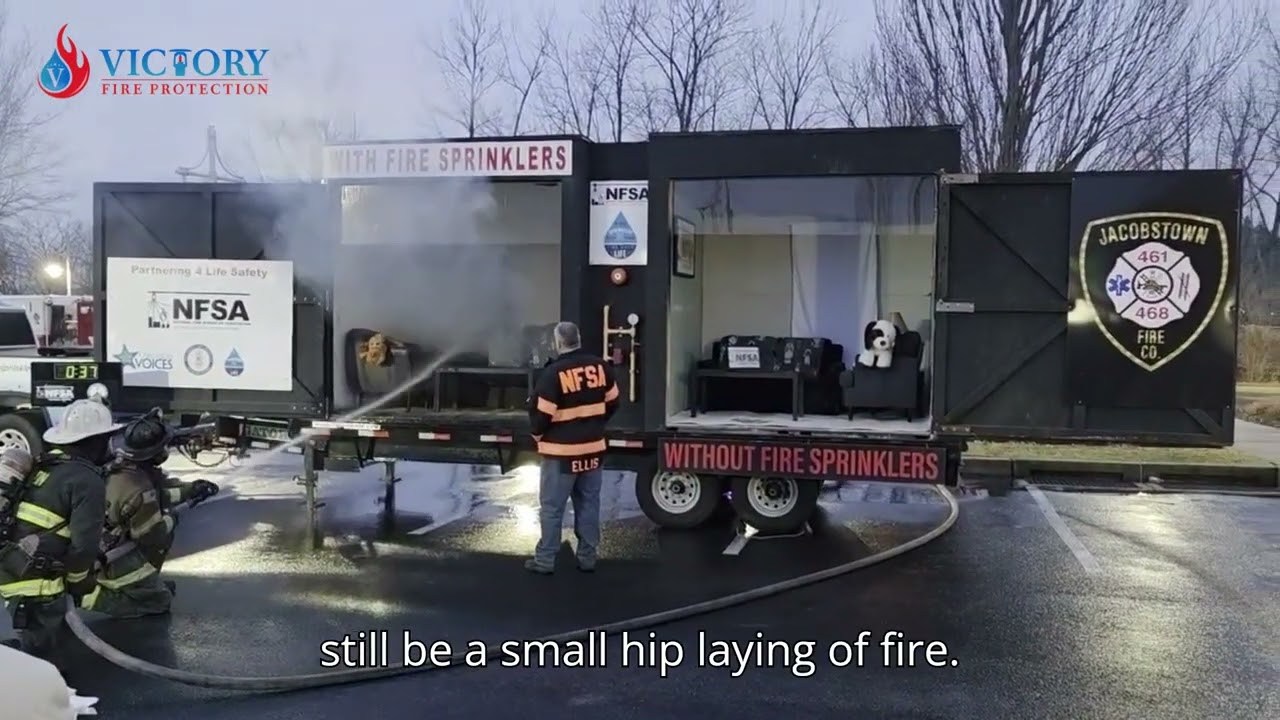
The live burn, conducted by NFSA’s Frank Ellis and Dave Davis, provided the “stark contrast” needed to change minds.
As the video illustrates, the water from a single sprinkler is significantly less damaging than the high-pressure hoses used by the fire department once a fire has already spread. In the time it takes for a fire truck to arrive, an unprotected room is usually a total loss.
The Hidden Danger of a “Shut-Off” System
Residents who walked into the event considering decommissioning their systems walked away with a renewed confidence in their home’s built-in protection. According to NFSA research, the presence of sprinklers reduces the risk of dying in a home fire by about 80%.
When you drain your system, you aren’t just losing protection; you’re creating a hazard. If a fire occurs, there is no pressure to suppress it. Furthermore, for those in townhomes or condos, a deactivated system puts your neighbors at risk as well.
Protect Your Home and Community
Don’t let myths compromise your safety. Whether you need a routine inspection, a repair, or just have questions about your home’s fire protection, Victory Fire Protection is here to help. We specialize in comprehensive homeowner fire sprinkler services designed to give you peace of mind.