
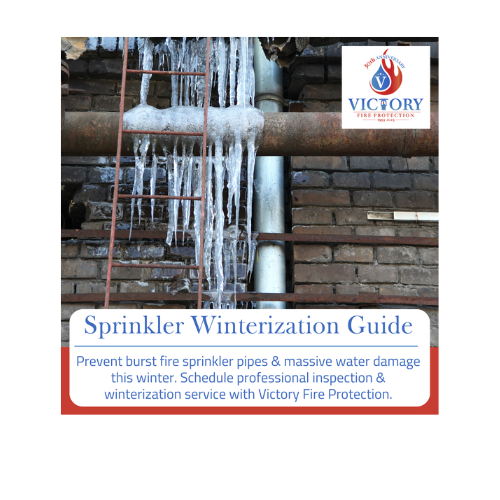
Frozen/burst sprinkler pipes are one of our largest service repair calls in the winter. For homeowners with fire sprinkler systems in Southeast PA, protecting your home from freezing temperatures helps avoid catastrophic water damage and ensures your life-saving system works when it matters most.
Keep reading to understand the risks, learn what proper winterization includes, and why it is important to not delay when scheduling your professional home sprinkler inspection.
Why Freezing Temperatures Are Your Home Sprinkler’s Biggest Threat
Bitter winter temperatures create a serious risk for residential fire sprinkler systems. When water inside a sprinkler pipe freezes, it expands rapidly with immense pressure. That expansion is what causes pipe rupture.
When a sprinkler pipe bursts, the results are immediate and severe:
- Sudden and forceful water release
- Damage to ceilings, walls, floors, and personal belongings
- Compromised sprinkler performance and complete loss of fire protection
If a fire occurs while your sprinkler system is disabled, your home and family are left dangerously exposed. Professional inspection is essential to prevent both water damage and life-safety failure.
The Cost of Sprinkler System Winterization
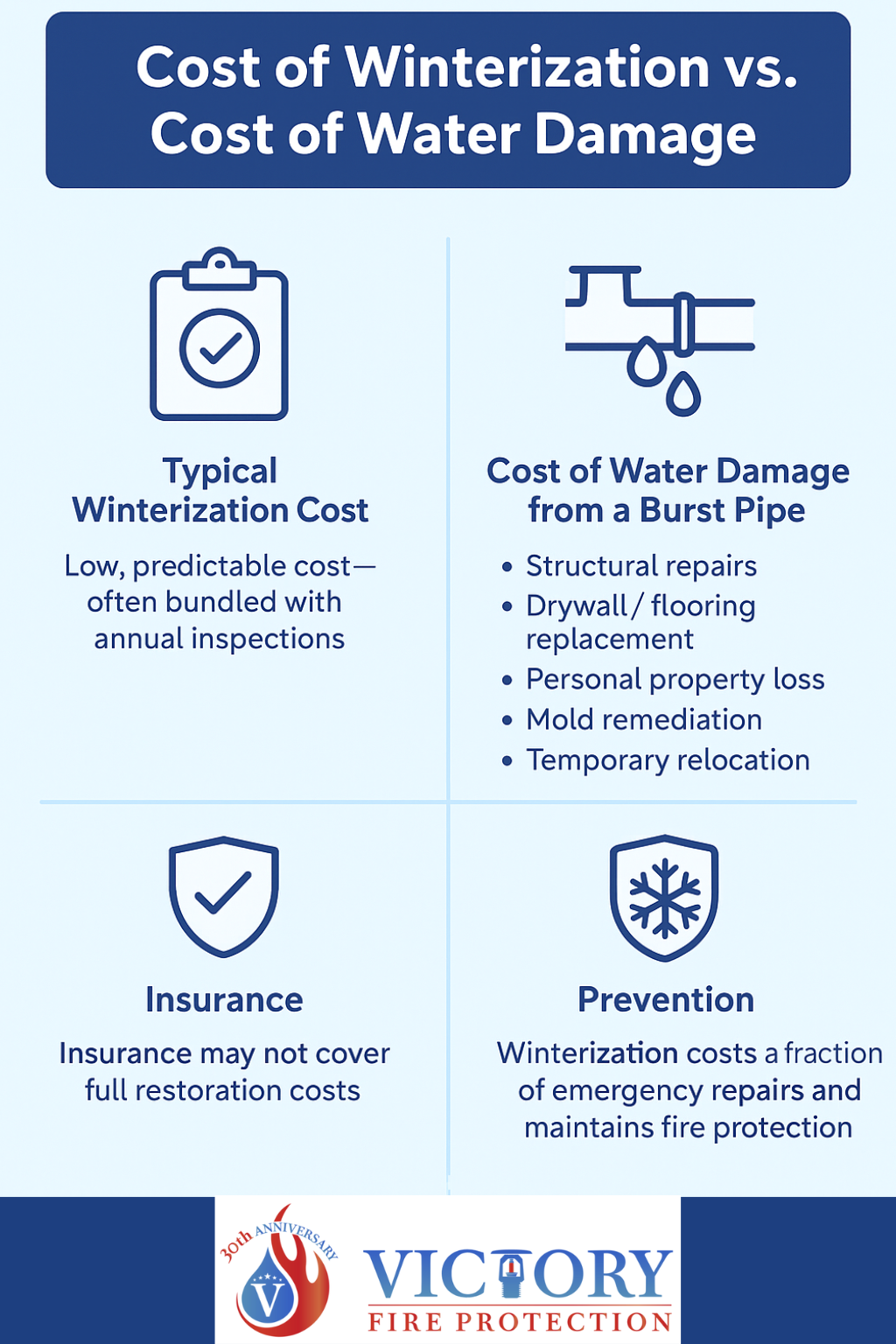
Winterizing your fire sprinkler system is one of the most affordable ways to protect your home—especially compared to the cost of repairing a burst pipe. The infographic below highlights the major differences between routine winterization costs, water damage expenses, insurance limitations, and why prevention is always the smarter investment.
- Winterization Costs: Low, predictable, and often included in annual inspections.
- Burst Pipe Damage: Repairs, drywall and flooring replacement, mold remediation, and temporary relocation often total several thousand dollars.
- Insurance: May only cover part of the damage—not full restoration.
- Prevention: Winterization is significantly cheaper than emergency repairs and keeps your fire sprinkler system operational.
Proactive Winterization is Your Best Defense
Preventing frozen sprinkler pipes is entirely achievable with the correct preparation, but it requires the specialized expertise of certified fire protection professionals who understand your local climate challenges.
For Builders and Developers: Sprinkler Design is Key for Winterization
The most effective defense starts with proper fire system design for home builders. Victory Fire Protection engineers systems with freeze-prevention strategies upstream, ensuring every installation is:
- Code-compliant.
- Properly insulated.
- Strategically routed to minimize exposure to cold zones.
For Homeowners: Addressing Vulnerabilities Over Time
Even in properly designed residential fire sprinklers, issues can arise over time that compromise freeze protection. Proper winterization is not a DIY task, as it requires specialized training to address common vulnerabilities:
- Recent Home Modifications: Changes made to a home—such as renovations in a wall or ceiling—without contacting a sprinkler company can unknowingly alter insulation or heat protection, creating a new cold pocket.
- Changes in Heating: A room that was once permanently heated may become unheated, turning a safe pipe route into a severe freeze risk.
- System Wear and Tear: A worn-down system can lose its integrity over time, making it more susceptible to freezing.
When to Schedule a Fire Sprinkler Inspection for Proactive Winterization
The goal of a residential fire sprinkler inspection is two-fold: to prevent freezing damage and to ensure the system is fully operational to suppress a fire, preventing a catastrophic life-safety failure.
Immediate Signs That Require a Professional Inspection
While an annual inspection is essential for all systems, certain signs indicate your system is at immediate risk of freezing or failure and needs professional attention right away:
- Unusual Noises in Walls or Ceilings: Creaking, popping, or knocking can be early indicators of thermal stress or expanding ice within the pipes.
- Condensation or Frost on Exposed Pipes: Visible moisture, sweating, or frost on piping suggests temperatures have already reached a dangerous threshold.
- Temperature Drops in Unheated Spaces: If areas like garages, crawl spaces, attics, or unfinished basements dip below freezing, any pipes routed through them are at high risk.
- Inconsistent Heat in the Home: Drafts, insufficient insulation, or HVAC issues can create cold pockets where sprinkler pipes may freeze.
- Overdue Annual Inspection: If your home’s last sprinkler inspection is over a year ago, your risk of both freezing and system failure increases significantly.
What a Residential Winterization Sprinkler Inspection Entails
When Victory Fire residential sprinkler inspectors come to your home, certified professionals fully inspect the system, indoors and out (if applicable), looking for potential freeze zones or issues that may affect the system, especially for winter.
- Vulnerable Pipe Inspection: We conduct a thorough inspection of the system, indoors and out (if applicable), to locate potential freeze zones or issues that may affect system performance.
- Dry System Maintenance: We drain drum drips (dry system condensation collectors) to prevent water from freezing and blocking the system’s activation.
- Exterior Component Checks: We inspect backflow pits (if applicable) which are often located outdoors and are susceptible to freezing if malfunctioning or corroding.
- Fire Department Connection (FDC) Inspection: For commercial buildings or apartment complexes, we inspect the FDC’s on the exterior to make sure they are not full of water or frozen shut, which can happen if they are failing and not caught during inspection.
- Antifreeze Solution Testing & Adjustment: For systems using approved antifreeze, the concentration levels are tested and adjusted. This maintains freeze protection without compromising fire suppression capability.
- Overall System Integrity Check: Beyond freeze protection, the inspection confirms proper pressure, inspects for wear, and verifies the function of all valves, alarms, and critical components.
Types of Fire Sprinkler Systems and Their Cold-Weather Vulnerabilities
Different systems have different vulnerabilities:
Wet Pipe Systems
Wet pipe systems are the most vulnerable during winter because they contain water year-round. Any section routed through an unheated area becomes a freeze risk.
Dry Pipe Systems
Dry pipe systems rely on pressurized air, but even small amounts of trapped moisture can freeze and block activation. Ensuring the system is fully drained is essential.
Antifreeze Systems
Antifreeze systems require annual concentration testing to ensure they provide freeze protection without compromising suppression performance.
Why Professional Sprinkler Inspection Is the ONLY Way to Go
Attempting to winterize your fire sprinkler system yourself can lead to more problems than it solves. A certified fire protection company has the specialized knowledge, tools, and experience to perform these critical tasks safely and effectively.
- Damage sensitive components
- Leave sections unprotected
- Create hidden freeze risks
- Accidentally disable your system entirely
Your Local Fire Protection Experts: Victory Fire Protection
Homeowners across Southeast PA (excluding Philadelphia) rely on Victory Fire Protection for expert installation, inspection, and design of residential fire sprinkler systems.
Don’t wait until temperatures drop. Protect your home, investment, and family with trusted, professional winterization.
Ready to ensure your home is winter-ready?
Contact Victory Fire Protection today to schedule your professional homeowner fire sprinkler inspection.